
Foam pattern development
The drawing or sample is translated into a foam pattern and reviewed for shrinkage, gating, wall sections, vents and the required machining stock.
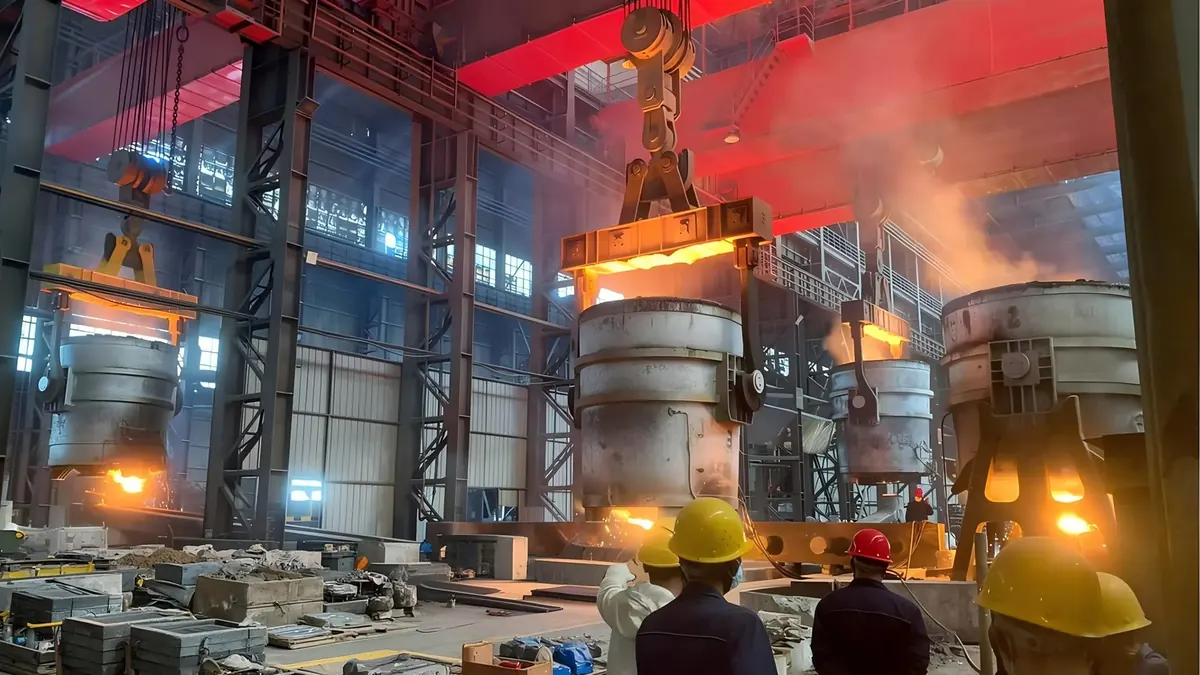
Une voie quasi nette qui peut simplifier les géométries complexes et réduire les noyaux ou l’usinage sur les pièces adaptées.
Lost foam casting uses a foam pattern that represents the final part geometry. The pattern is coated, placed in a moulding medium and surrounded by compacted sand. During pouring, the foam is displaced as the metal fills the cavity. The method is considered for complex shapes, integrated features and projects where a near-net-shape result can simplify downstream work.
The exact controls, material grade and acceptance documents are confirmed against the part requirement.
The drawing or sample is translated into a foam pattern and reviewed for shrinkage, gating, wall sections, vents and the required machining stock.
The foam pattern is coated to control the mould interface and assembled with the planned gating system. Complex features can be incorporated into the pattern.
The coated pattern is placed in the moulding medium and surrounded by sand. Controlled filling and vibration support pattern stability and cavity definition.
Vacuum and pouring conditions are coordinated so the metal replaces the foam pattern and fills the intended geometry. Process settings depend on the alloy and part design.
After cooling, the casting is recovered, cleaned and inspected. Heat treatment, machining and finishing follow the confirmed technical requirement.
Lost foam castings still require cleaning, dimensional review and any specified heat treatment, machining or non-destructive testing. The pattern design and inspection points are agreed before the first trial so the near-net-shape benefit is measurable against the drawing.