
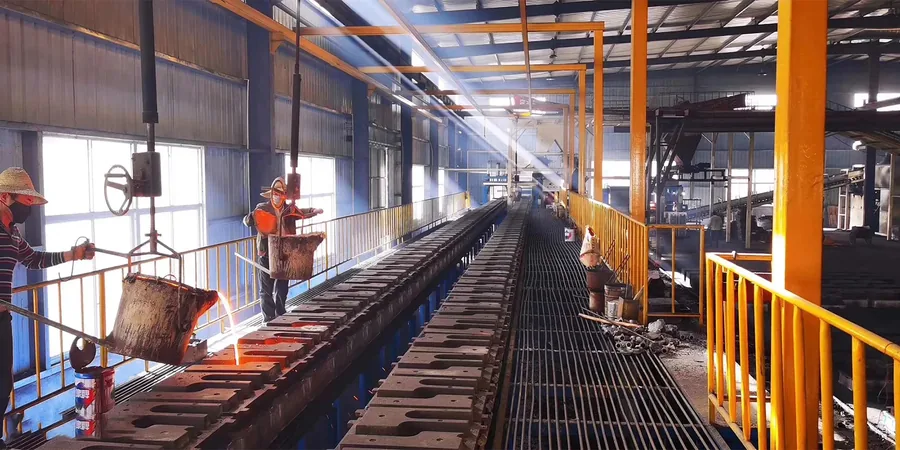
Inquiries that begin with "what is your MOQ?" usually get a frustrating answer from a foundry: it depends on the part. This is not a delay tactic. MOQ, tooling and lead time are all driven by the geometry of one specific casting, and quoting them before the part is known would simply be a guess.
MOQ is driven by economics, not policy. A pattern or tooling set costs the same whether you cast one piece or a thousand, and that cost has to be spread across the order. A small, simple part that pours in one mould can be produced in low quantities at a fair price per piece; a large jaw plate that occupies a full mould and needs long cooling and heat-treatment time makes small runs expensive per piece. So the honest answer to "what is your MOQ" is usually "send the part and we will show you where the quantity curve makes sense" — and for repeat or frame orders, the quantity is often spread across the year rather than a single shipment.
Lead time follows the same logic. Geometry decides the pattern or tooling route and how long that takes. Material and inspection scope decide the production steps — a manganese casting needs a long, controlled heat treatment after pouring, and NDT or third-party inspection adds days at the end. Quantity decides whether production can be phased. Once the part reference is known, we can separate "pattern/tooling lead time" from "production lead time" so you know exactly what you are waiting on.
The three questions that unlock a fast answer are: (1) the part number, drawing, sample or machine model; (2) the material or hardness you need (or the application so we can propose it); (3) the annual or per-order quantity and the delivery market. With those three, a foundry can confirm tooling, MOQ, lead time and the inspection scope in writing — usually within a week for a first quotation.
The practical takeaway for buyers: do not delay the inquiry until you have a full drawing. A part number or a photo of the worn part, plus quantity and destination, is enough to start the review. Everything else — exact dimensions, tolerances, marking and documents — gets confirmed during the review, before any commitment.