
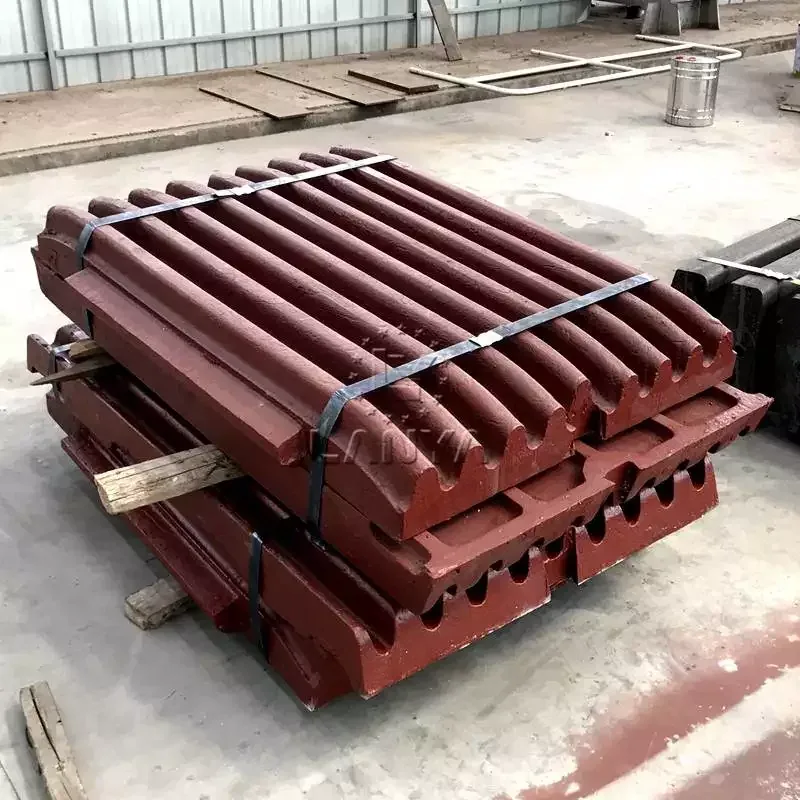
Jaw plate material is not a one-size choice. A plate that lasts well in one quarry can fail early in another, usually because the feed conditions — rock hardness, size, moisture and the crusher setup — change the failure mode. Understanding which mode is wearing your plates is the first step to choosing the right material.
For the great majority of primary and secondary jaw applications, high-manganese steel in the Mn13 and Mn18 families is the standard. Under repeated impact, the surface work-hardens: the top layer compresses into a much harder skin while the core stays tough, so the plate resists both impact and abrasion at the same time. Mn13 (about 13% manganese, typically matching an ASTM A128-grade equivalent) covers standard quarry feed; Mn18 with slightly higher manganese and refined treatment is specified where feed is harder or plates are larger and more likely to flex.
There are cases where manganese steel is not the best start. If the feed is mostly fines with little impact energy, a manganese plate may not work-harden properly and can wear smoothly; an alloy steel or a composite with higher initial hardness can last longer. If the feed contains very large, hard boulders, toughness matters more than hardness, and the balance shifts back toward manganese. This is why we ask about feed size, abrasiveness and the crusher model before quoting — the grade is selected against your working conditions, not a menu.
What you should send the foundry to get a reliable recommendation: the crusher model and closed-side setting, the typical feed size and rock type (for example granite, basalt, limestone, ore), the current plate life in hours and the failure pattern — broken, peened, or smooth-worn. Two plates of the same part number often need different materials for different pits, and the review exists to catch that before production.
We produce jaw plates in Mn13, Mn18 and variants, and review alloy options per application. Send the part number or drawing with your working conditions and the technical review will confirm the material, hardness and inspection scope before any quote is prepared.