
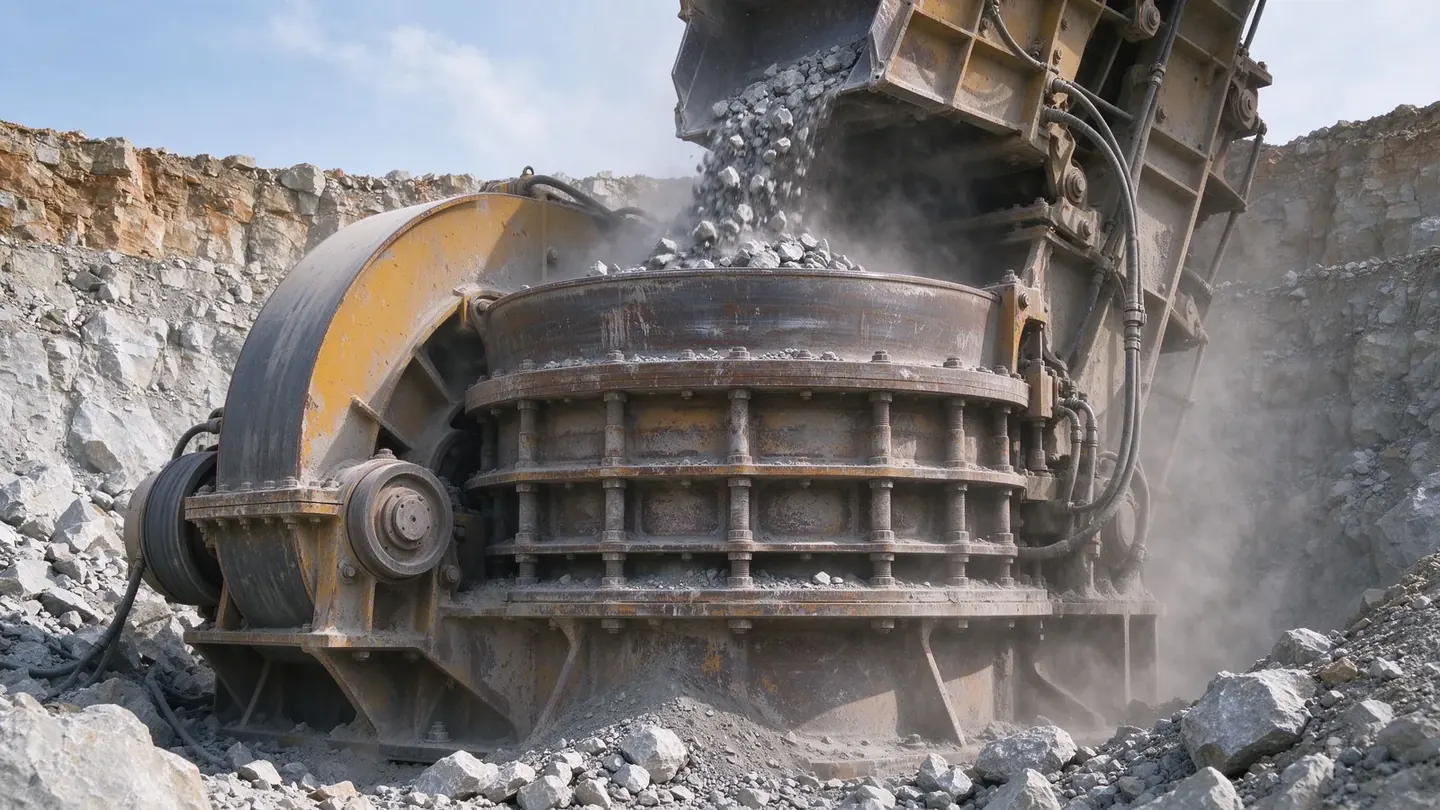
Wear Parts for Mining and Ore Processing
Jaw plates, cone mantles and concaves, blow bars, mill liners and bucket teeth — cast in manganese, high-chromium and chrome-moly grades, and specified against the duty the part actually sees.
A Wear Part Is a Consumable, Not a Spare
In a mining circuit, wear parts are the second-largest line after energy. A jaw plate, a cone mantle or a set of mill liners is bought several times a year, and the only number that matters is cost per tonne crushed or milled — not the price on the quotation. A part that costs 20% less and lasts 30% shorter is the more expensive decision.
The complication is that "the same part" is not the same duty everywhere. Two identical cone crushers, one fed with a clean coarse feed and one with a slabby, damp, high-silica feed, will wear a mantle in completely different ways. That is why a quotation that names a grade before asking what the chamber is doing is a guess dressed as a price.
DINGDAR has cast wear parts in Henan since 1986, with green sand, shell moulding, lost foam and investment routes, heat treatment, machining and inspection in the same plant. Mining consumables are reviewed the same way as any other drawing: geometry, material, hardness and inspection scope agreed in writing, then cast, heat treated, machined where required and released with records.
What Wears Where, and What To Specify
Six positions cover most of the consumable spend in a crushing and grinding circuit.
| Position | Typical grade | How it usually fails | What to send |
|---|---|---|---|
| Primary crushing — jaw plates | Mn13, Mn18 or Mn18Cr2 austenitic manganese steel | Even abrasion, or cracking at the tooth roots when the feed is slabby or contains oversize | Feed opening, throw and toggle setting; whether the jaw is corrugated or smooth; wear depth at replacement |
| Secondary / tertiary — mantles and concaves | Mn18Cr2 for heavy impact and thick sections; high-chromium iron where the duty is fine and abrasive | Scalloped worn profile that opens the closed-side setting, or breakage from tramp metal | Cone model, chamber type (coarse / medium / fine), CSS, and the profile actually worn |
| Impact crushing — blow bars, impact plates | High-chromium white iron (Cr15–Cr26) | Rounded leading edge that stops breaking rather than wearing through | Rotor diameter, bar profile (standard / tall), feed size and the product size required |
| Hammer mills and shredders — hammer heads, grates | Mn13 / Mn18 for impact; high-chromium iron for abrasive, low-impact duty | Uneven wear across the hammer face, or a broken eye from a jammed feed | Hammer weight and hole geometry, rotor speed, and the wear pattern photo |
| Grinding — mill liners, grate plates, lifter bars | Pearlitic chrome-moly steel for large sections; Mn18Cr2 where impact dominates; high-chromium iron in fine grinding | Flattened lifters that let the charge slip — throughput falls before the liner is worn out | Mill size, ball size and charge, F80 / P80, power draw, and the tonnes or hours achieved per set |
| Loading and hauling — bucket teeth, adapters, GET | Alloy steel with a hardened wear tip | Tip wear that changes digging angle, or adapter fretting in the nose | Machine model, bucket type, pin or pinless retention, and the ground conditions |
Grade families and their behaviour are set out in more detail on the wear-part materials page.
Why Two Identical Crushers Wear Differently
Energy of impact, not just tonnage
Two plants can crush the same tonnage with completely different wear because one feed is slabby and the other is already reduced. Impact energy at the liner surface is what work-hardens manganese and what cracks high-chromium iron.
Abrasion index and silica content
A high silica fraction in the feed shifts the balance toward high-chromium irons. A clean, coarse, high-impact feed shifts it back toward manganese.
Reduction ratio and closed-side setting
A tighter CSS loads the chamber differently and moves the wear band. A profile that was right for a 40 mm product is usually wrong for a 20 mm one.
Section thickness
Thick sections cool slowly in the mould and can lose toughness if the grade is chosen for a thin casting. Large cone liners and thick jaw plates are where Mn18Cr2 earns its cost over Mn13.
Tramp metal and operating discipline
A broken liner is almost never a material failure on its own. It is a torn liner plus a history of uncrushable metal, a jammed chamber or bolts run loose.
What Makes a Quote Answerable in One Round
Six items, and the technical review does not need a second exchange.
- Equipment make and model, or the OEM part number
- A drawing, or a photograph of the worn part with a scale in frame
- Material grade currently used, and the standard it must meet
- Feed size, product size and throughput the circuit is expected to hold
- How the part failed — worn through, cracked, broken, deformed or worn unevenly
- Wear life achieved, in tonnes or operating hours, and the replacement interval you want to reach
Drawings are the fastest route, but a worn part photographed next to a ruler, plus the machine model, is usually enough to start. Send it to our technical team and the material and inspection scope come back in writing.
Mining Wear Parts FAQ
Manganese or high-chromium — which one should I specify?
Can you supply against an OEM part number without a drawing?
What is the smallest order you will quote?
Do you supply inspection documents with mining wear parts?
How do I get wear life up without changing supplier every season?
Further reading: how to choose jaw plate material , what decides crusher wear part service life and the information needed for a custom wear parts quote .
Send the Part, Not the Catalogue Number
A drawing, an OEM part number or a photo of the worn part — we confirm material, geometry and inspection scope and reply with technical feedback within 12–24 hours.