
Pattern preparation
The pattern and parting line are reviewed for the required geometry, draft, cores and machining allowance. The pattern surface is prepared for the resin-coated sand shell.
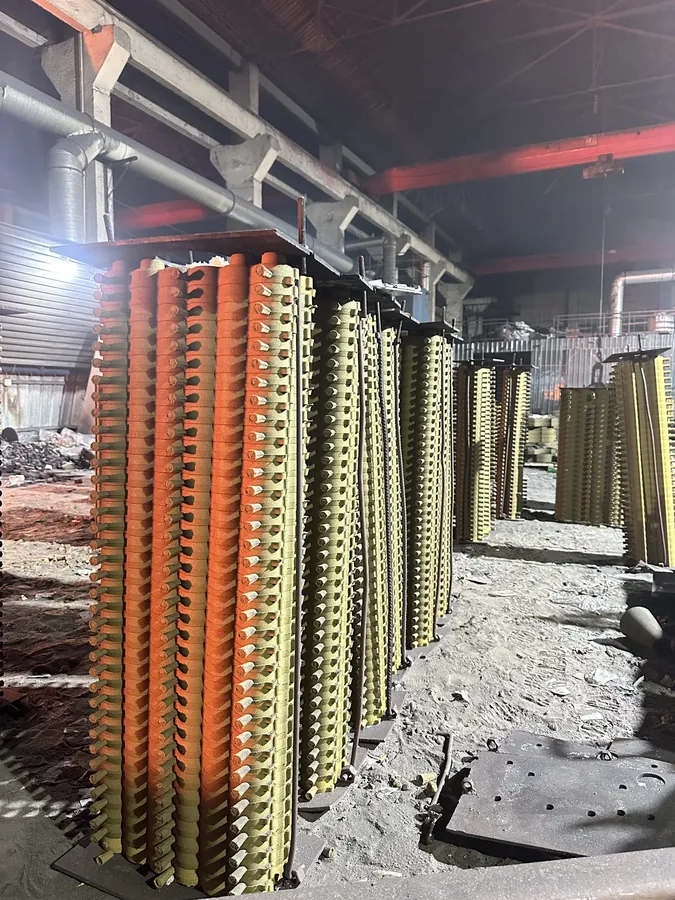
A resin-coated sand shell route for repeatable small and medium castings where dimensional consistency, surface quality and series production matter.
Shell moulding forms a thin, rigid mould from resin-coated sand heated against a pattern. Compared with standard green sand moulding, the shell can provide a more stable mould surface and more repeatable results for suitable parts. It is considered when the buyer needs a balance between tooling cost, production volume, finish and dimensional control.
The exact controls, material grade and acceptance documents are confirmed against the part requirement.
The pattern and parting line are reviewed for the required geometry, draft, cores and machining allowance. The pattern surface is prepared for the resin-coated sand shell.
Resin-coated sand is brought against the heated pattern and cured into a rigid shell of controlled thickness. The shell halves are checked before assembly.
Cores and shell sections are fitted, aligned and supported with backing material where required. The gating and riser arrangement is kept stable for repeat production.
The agreed alloy is melted and poured into the assembled shell. Cooling time and handling are managed according to the part geometry and material.
The shell is removed after solidification, followed by cutting, fettling, heat treatment, machining and inspection according to the confirmed order scope.
After shell casting, the agreed route may include shakeout, cutting, fettling, heat treatment, machining and dimensional inspection. Sample approval or first-article review can be used when the part is new or the geometry is critical.