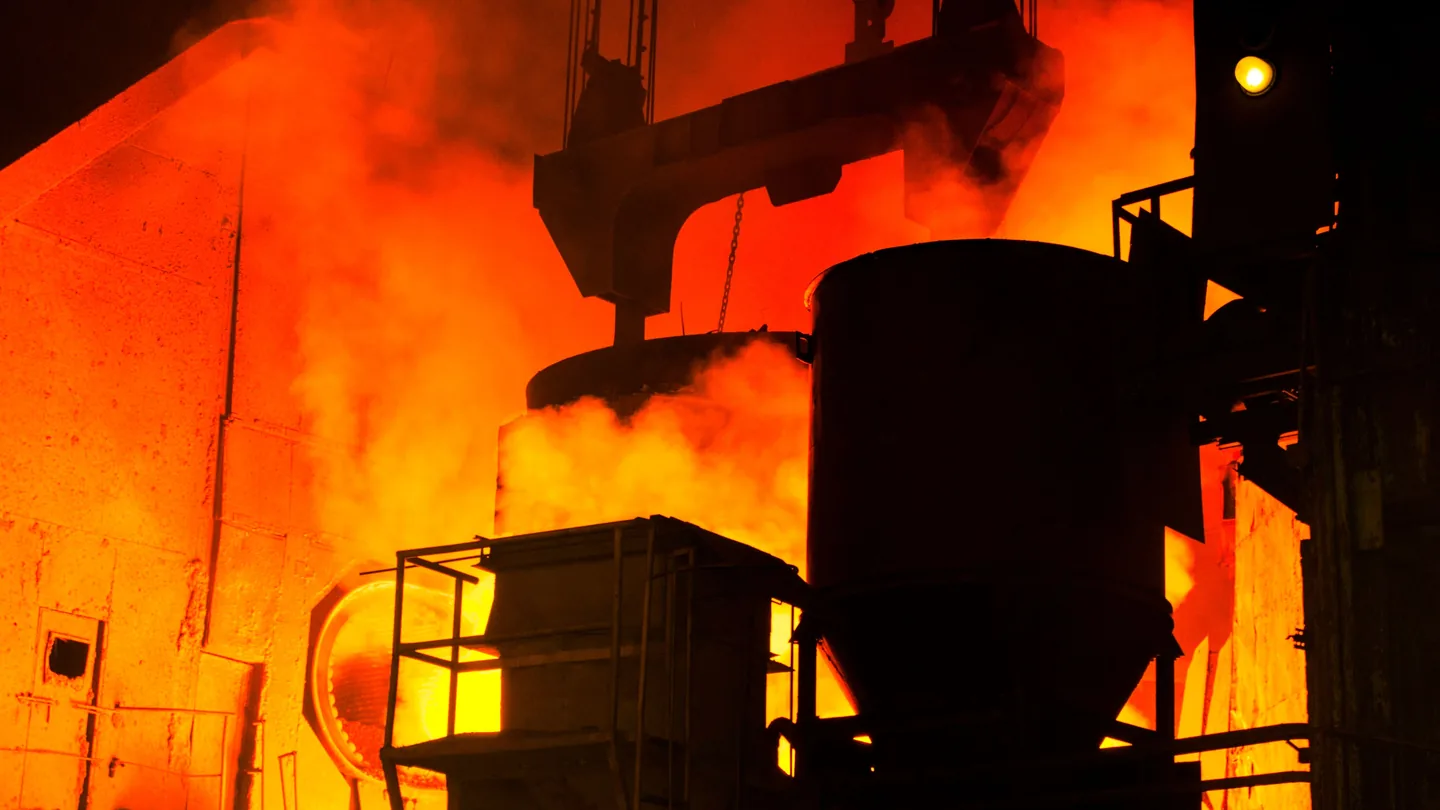
Cast and heat-treated wear parts in the DINGDAR plant
Material selection

Wear-Part Materials: What Each Grade Is Actually For

Manganese steel, high-chromium white iron, pearlitic chrome-moly steel, martensitic cast steel and ductile iron — how they differ, and which failure mode each one is the right answer to.

The short version

Toughness and Wear Resistance Trade Against Each Other

Every wear part sits somewhere on a single line: at one end, a material that resists scratching but cracks under impact; at the other, a material that absorbs impact but wears away quickly when the load is gentle. Manganese steel and high-chromium iron are the two ends of that line. Everything else — chrome-moly steel, martensitic steel, ductile iron — sits between or beside them.

Choosing a grade is therefore not a search for the hardest material. It is a decision about which failure mode you are willing to accept, made with the feed, the machine and the maintenance window in view.

Grade families

Five Families, Compared

Hardness values are typical ranges, not guarantees — the section size, heat treatment and standard class move them.

Austenitic manganese steel

Mn13, Mn18, Mn18Cr2 — ASTM A128 (Hadfield) family and GB/DIN equivalents

Hardness
Roughly 170–230 HB as cast; work-hardens in service toward roughly 450–550 HB at the worn surface
Behaviour
Very high toughness. The surface hardens only where impact is applied, so the part stays ductile underneath and resists cracking and breakage.
Where it fits
Primary and coarse crushing, jaw plates, cone mantles and concaves, hammer heads, thick-section parts with real impact energy
Where it fails
Pure sliding abrasion with little impact — the surface never work-hardens and a chrome iron will outlast it

High-chromium white iron

Cr15–Cr26 families — ASTM A532 and GB/DIN equivalents

Hardness
Typically in the 500–600 HB range as cast (roughly 52–60 HRC), depending on class and section
Behaviour
Hard chromium-rich carbides in a supporting matrix. Excellent resistance to scratching and grinding abrasion, with much lower toughness than manganese steel.
Where it fits
Blow bars, impact plates, fine grinding chambers, mill internals in abrasive duty, chute and hopper liners
Where it fails
Heavy uncrushable impact, thermal cycling, and thin sections that cannot feed the casting — cracking rather than wearing out

Pearlitic chrome-moly steel

Medium-chromium, molybdenum-bearing cast steel grades, heat treated

Hardness
Typically around 250–350 HB after heat treatment, per grade and section
Behaviour
A middle path: useful abrasion resistance with enough toughness to survive large castings and moderate impact, and better machinability than white iron.
Where it fits
Large mill shell and head liners, thick-section parts where a chrome iron would crack
Where it fails
Fine, high-silica abrasion where a high-chromium iron is affordable

Low-alloy and martensitic cast steel

Low-alloy grades, quenched and tempered to the drawing

Hardness
Set by heat treatment — commonly in the 30–50 HRC band, depending on temper and section
Behaviour
Strength and toughness with moderate wear resistance; responds predictably to heat treatment and machines well.
Where it fits
Structural castings with a wear face, housings, adapters, brackets and machined components
Where it fails
High-stress grinding abrasion, where carbide-bearing irons are the correct answer

Ductile iron

GGG40 / GGG50 / GGG60 and similar — ISO 1083 (EN-GJS), ASTM A536, GB 1348

Hardness
Typically around 130–250 HB, per grade
Behaviour
Castability, strength and machinability together; a sound choice for complex shapes that are not wear faces.
Where it fits
Housings, frames, covers and components where stiffness and machining matter more than abrasion
Where it fails
Any position where abrasion is the dominant mechanism
Why one number misleads

Hardness Is a Symptom, Not the Specification

Two white irons can both read 60 HRC and behave completely differently in service, because hardness says nothing about which carbides are present, how they are distributed, or how well the matrix supports them. Chromium-rich M7C3 carbides are harder and blockier than the M3C carbides in a lower-alloy iron, and they resist scratching abrasion far better at the same bulk hardness.

The same logic runs the other way for manganese steel. Its as-cast hardness looks unremarkable next to a chrome iron, and that number is the wrong thing to compare: the material is designed to harden only where the charge hits it, which is why it survives conditions that destroy a harder, more brittle part.

Section size belongs in the same conversation. A thick section cools slowly, and a slow-cooled structure is not the structure the data sheet was written for. This is why large cone liners and thick jaw plates are routinely specified in a higher-manganese, chromium-bearing grade rather than the standard one.

Selection

Five Questions We Ask Before Naming a Grade

How does the part actually fail?

Worn evenly thin, chipped at the edge, cracked through a section, deformed, or worn in one band. Each answer points to a different family — and a harder alloy only helps the first one.

How much impact energy reaches the surface?

Manganese steel needs impact to work-harden; without it, it wears quickly. High-chromium iron needs the impact to stay modest; too much and it cracks. Feed size distribution is the practical proxy for this.

How thick is the section?

Section thickness sets cooling rate, and cooling rate sets what the microstructure can be. A grade that performs in a 40 mm plate may not be achievable in a 200 mm cone liner without a different chemistry.

What is the abrasion mechanism?

Scratching abrasion from hard silica, grinding abrasion under a charge, or erosion from a fast particle stream. They do not respond to the same carbide volume or the same matrix hardness.

What is the replacement window?

A planned shutdown every eight weeks and an unplanned failure in week five call for different compromises between wear resistance and toughness.

Questions buyers ask

Material FAQ

Is a harder material always a better wear part?
No. Hardness predicts resistance to scratching, not resistance to cracking. A high-chromium iron at 58 HRC will outlast a manganese plate in fine abrasive duty and can fail in a week in a primary crusher fed with slabby rock, because it has far less toughness. The specification has to match the failure mode, not a single number on a data sheet.
Which standard do you certify against?
Castings are produced and certified against the standard the project specifies — the ASTM A128 series for austenitic manganese steel, ASTM A532 for high-chromium irons, ISO 1083 / ASTM A536 for ductile iron, with GB and DIN equivalents where the drawing calls for them. The exact standard and acceptance criteria are confirmed in writing before production.
Can you supply a material certificate with the order?
Yes. A certificate with the heat analysis is standard, and dimensional inspection reports, hardness records and visual inspection records can ship with it. NDT or third-party inspection is arranged when specified. The document scope is agreed with the purchase order so the paperwork matches what your QA team needs.
Can you match the grade of an existing part?
Send the part or a section of it, together with any OEM specification, drawing or hardness reading you have. The chemistry and hardness are checked and the achievable equivalent is confirmed in the review — including where the original grade cannot be reproduced in the section size required.
Do you heat treat in house?
Heat treatment is carried out in the plant, matched to the grade: solution treatment for austenitic manganese steel, hardening and tempering for martensitic and chrome-moly grades. Hardness is recorded as part of the release documents.

Further reading: choosing jaw plate material , Mn13 jaw plates in practice and Mn18Cr2 mill liners .

Tell Us How the Last Part Failed

The failure mode, the feed and the machine model are enough to narrow the grade. We reply with a material recommendation and inspection scope within 12–24 hours.

Ask for a Grade Recommendation
WhatsApp Us