
1. Part identity and geometry
Send the part number, crusher brand and exact model. A current 2D drawing, 3D model, sample or clear photos of the working, mounting and side faces help confirm the profile, bolt-hole pattern and critical dimensions.
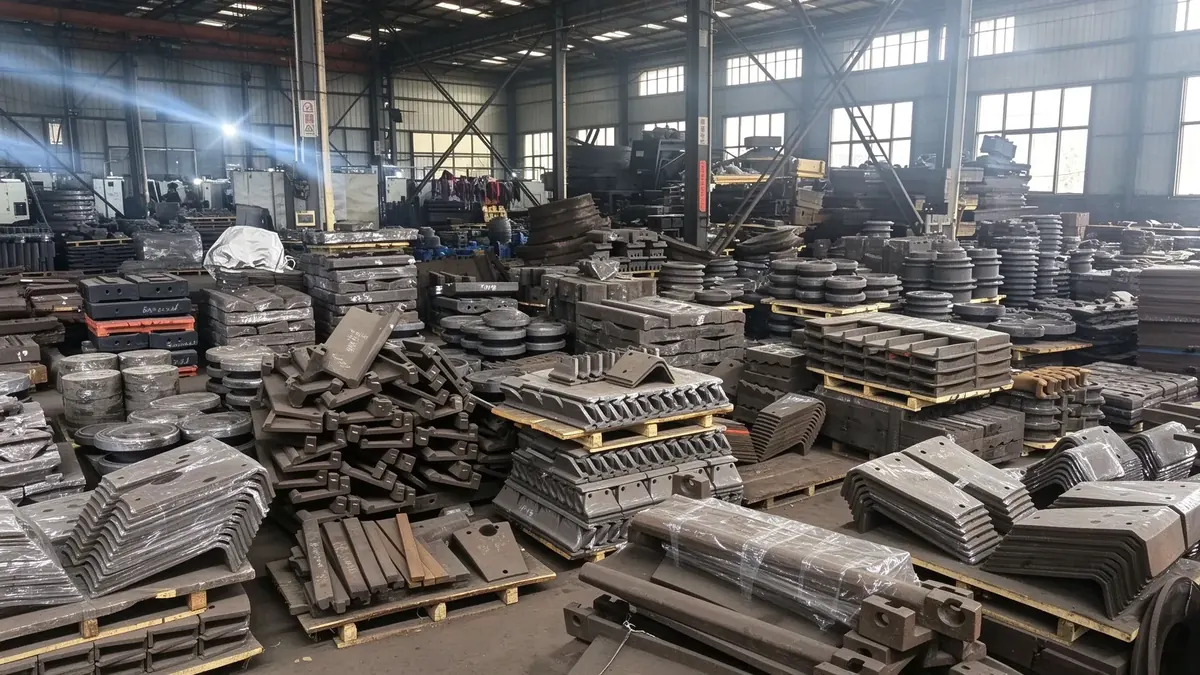
Send the information you have — a drawing is useful, but a part number, equipment model, sample or clear worn-part photos are enough to start a technical review.
Use this checklist to reduce clarification rounds and help us confirm the material, process, inspection scope and delivery basis before quoting.
You do not need to prepare a perfect technical package before the first conversation. The goal is to make the part identifiable, the operating duty understandable and the acceptance scope visible.
Send the part number, crusher brand and exact model. A current 2D drawing, 3D model, sample or clear photos of the working, mounting and side faces help confirm the profile, bolt-hole pattern and critical dimensions.
State the application, feed material, typical feed size, closed-side setting or relevant operating data, and whether the duty is primary, secondary or tertiary. Add the current wear pattern, failure mode and service record if you have them.
Tell us the specified grade or the result you need to improve. High-manganese steel, high-chromium cast iron, alloy steel and ductile iron are reviewed against the part and operating conditions. If a standard, hardness range or heat-treatment requirement applies, include it.
Include the first-order quantity, expected annual volume, repeat-order plan, delivery country and destination port when known. If several references belong to the same machine or shipment, list them together so tooling, inspection, packing and freight can be reviewed as one project.
Specify dimensional checks, hardness records, material certificates, NDT, third-party inspection, marking, packaging and certificate language before the quote. This keeps the acceptance scope visible and prevents documents being added after production.
The quotation should explain what is being priced, not hide the technical assumptions behind a single number.
Match the part number, machine model, drawing, sample or photos to the geometry and revision that need to be produced.
Review feed conditions, wear pattern, material, hardness and casting route against the actual operating requirement.
Agree dimensions, marking, inspection records, NDT or third-party inspection before production starts.
Confirm quantity, tooling, MOQ, lead time, packing and delivery market on the same technical basis.
See how part identity, application, quantity, acceptance criteria and destination change the quotation.
Read guide →Understand which variables determine the commercial answer for a casting project.
Read guide →Specify material, dimensional, hardness, visual and additional inspection evidence before shipment.
Read guide →Send the drawing, part number, equipment model or worn-part photos with quantity and delivery market if known. We reply with technical feedback within 12–24 hours.