
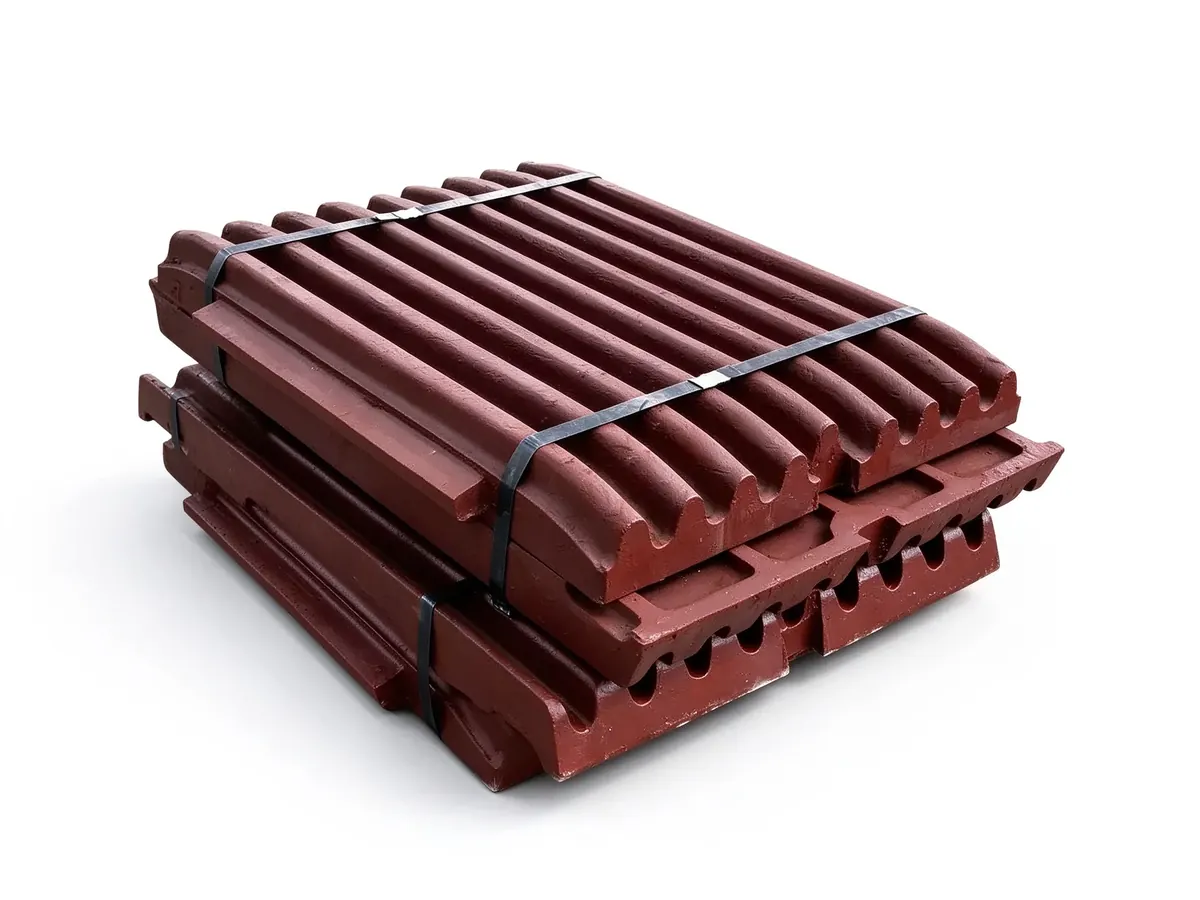
Direct answer: A jaw plate is identified from four sources of evidence: the part number cast or stamped on the plate, the crusher brand and exact model read in full from the nameplate, a measured geometry set, and photographs of the worn plate. The measurement set that matters is overall length and width, thickness at the thickest and thinnest point, tooth pitch, bolt-hole diameter and centre-to-centre distance, and the distance from the mounting face to the wear face. Weight is the single quickest cross-check, because two plates with the same part number but noticeably different weight are not the same casting. Where the part number is worn away, the machine model plus a drawing or a measured worn part is enough to reproduce the geometry.
Why identification decides the quote
A jaw plate looks like a simple casting, but the differences between plates are easy to underestimate: crusher brand and model, chamber profile, tooth shape, bolt-hole pattern and revision level all change the part. An inquiry that starts with the correct identification usually saves two or three rounds of clarification — and avoids casting the wrong part at all. The points below are the ones that most often decide whether a plate is quoted correctly the first time.
Start with the part number and the nameplate
Start with the part number and the machine. The fastest identifier is the part number cast or stamped on the plate, or the crusher model from the nameplate. Read the nameplate in full rather than copying the model from a purchase record, and note:
- brand, series and exact model designation
- feed opening and, where shown, the setting range
- serial number and year of manufacture
- any OEM or licence marking on the plate itself
Confirm the geometry with measurements
Then confirm the geometry. Note the chamber type (standard, coarse or fine), the tooth profile (wave, straight or custom), the position and spacing of the bolt holes, the thickness, and whether the plate is the fixed or movable jaw — they are not interchangeable. A practical measurement set is: overall length and width, thickness at the thickest and thinnest point, tooth pitch, bolt-hole diameter and centre-to-centre distance, and the distance from the mounting face to the wear face. Take them with a tape and a calliper on the worn plate, and record the weight if the plate can be weighed. Weight is the single quickest cross-check: two plates with the same part number but noticeably different weight are not the same casting.
Photograph the worn plate properly
Photograph the worn plate properly, because the wear pattern carries diagnostic information that a description rarely captures. A set of photos — the wear face, the back face, the mounting face and the worn profile from the side — tells a foundry more than paragraphs. Read the pattern before sending it:
| What you see | What it usually means |
|---|---|
| Smooth, polished wear face with little deformation | Low impact energy — manganese may not be work-hardening; consider a harder starting grade |
| Deep gouging or metal flow at the feed end | High impact from oversized feed; toughness matters more than hardness |
| Even wear across the whole face | Balanced chamber; a material change is unlikely to gain much life |
| Cracks starting at bolt holes or thin sections | Section design, clamping or thermal stress — a material change alone will not fix it |
| Uneven wear, one side much deeper | Feed segregation or a mis-set chamber; fix the cause before changing the plate |
What the review confirms before quoting
Send the part number, machine model, key measurements and photos together, and the technical review confirms the identity, material and hardness before any quotation. If you are unsure whether two plates are the same, say so in the message — the review exists to catch that before production, not after. If the plate is out of production or the OEM part number no longer exists, a drawing or a measured worn part is enough to reverse-engineer the geometry, and the review will state which dimensions have to be agreed before a pattern is made. Related reading: how to choose jaw plate material and Mn13 jaw plates in detail, or send the details through the contact form.